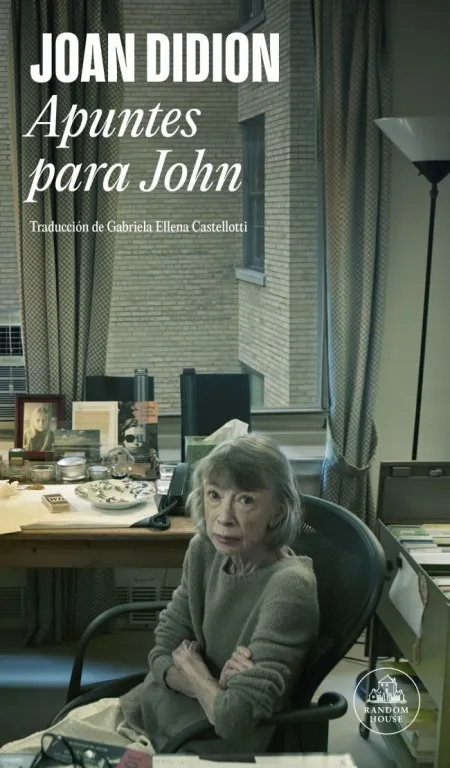
Notes To John
Didion, Joan
In November 1999, Joan Didion began seeing a psychiatristbecause, as she wrote to a friend, her family had had 'arough few years.' She described the sessions in a journal shecreated for her husband, John Gregory Dunne.For severalmonths, Didion recorded conversations with thepsychiatrist in meticulous detail. The initial sessionsfocused on alcoholism, adoption, depression, anxie...
Sinopsis
In November 1999, Joan Didion began seeing a psychiatrist
because, as she wrote to a friend, her family had had 'a
rough few years.' She described the sessions in a journal she
created for her husband, John Gregory Dunne.For several
months, Didion recorded conversations with the
psychiatrist in meticulous detail. The initial sessions
focused on alcoholism, adoption, depression, anxiety, guilt,
and the heartbreaking complexities of her relationship with
her daughter, Quintana.
The subjects evolved to include her work, which she was
finding difficult to maintain for sustained periods. There
were discussions about her own childhoodmisunderstandings and lack of communication with her
mother and father, her early tendency to anticipate
catastrophe-and the question of legacy, or, as she put it,
'what it's been worth.' The analysis would continue for
more than a decade.Didion's journal was crafted with the
singular intelligence, precision, and elegance that
characterize all of her writing.
Comentarios
Sé el primero en comentar este libroArtículos relacionados






Otros libros del autor